GET YOUR FREE
GUIDE HERE!
GUIDE HERE!

PJ Anderson
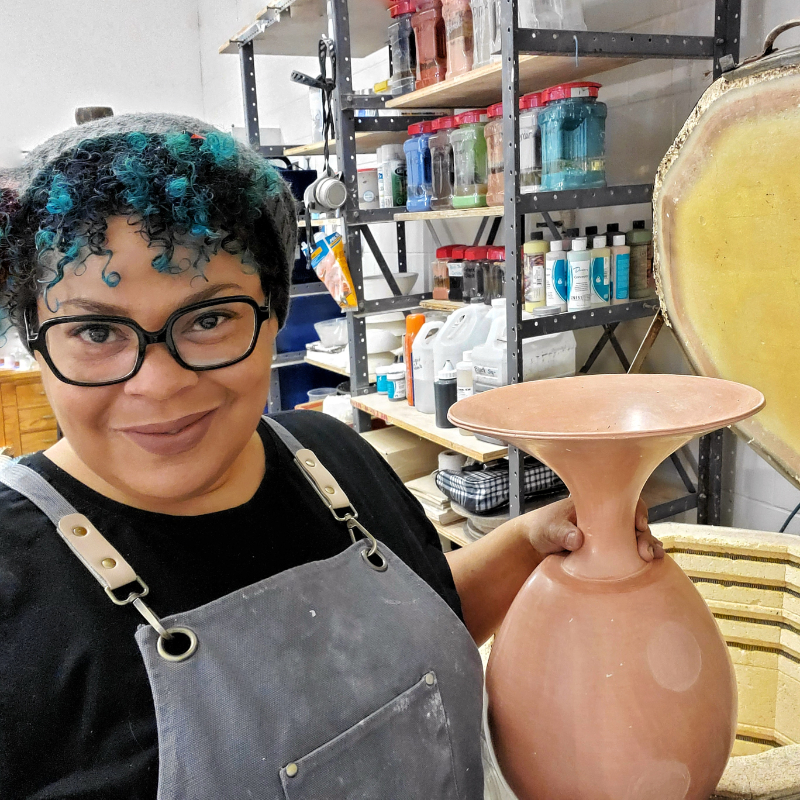
courtesy of artist
No items found.
Biography
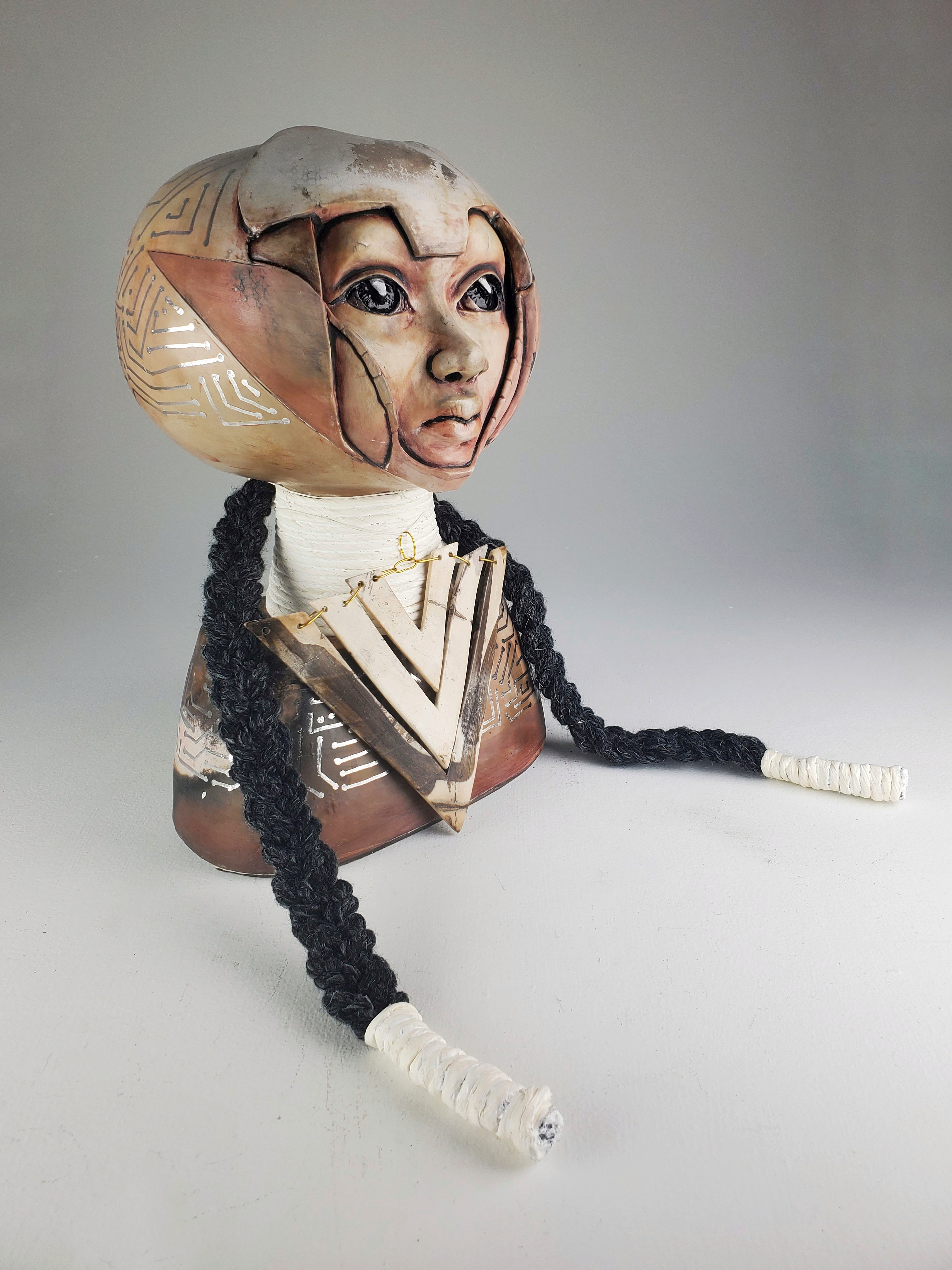
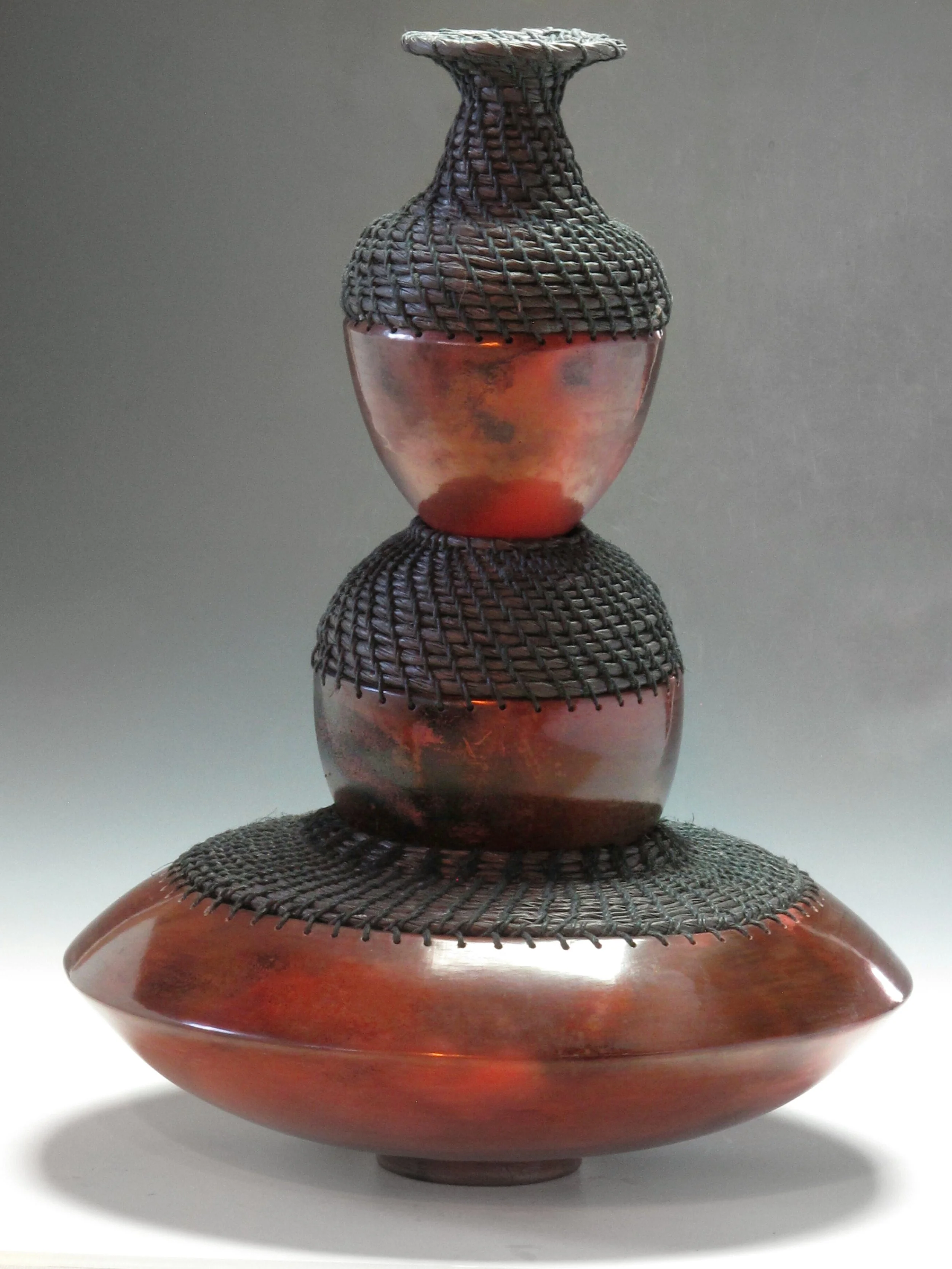
PJ Anderson is a Canadian ceramic artist of Afro-Jamaican and Red River Métis heritage whose practice examines cultural inheritance, colonial disruption, identity, technology, environmental justice, and the recovery of traditional making knowledge. Working primarily with handbuilt ceramics, weaving, and mixed media, Anderson uses techniques including coiling, burnishing, terra sigillata, smoke firing, and basket weaving—processes connected to ceramic and fiber traditions practiced by Indigenous communities in Africa and the Americas. Her work considers what happens when intergenerational systems of knowledge transmission are disrupted by colonialism and how contemporary artists might reclaim, adapt, and transmit those practices.
Anderson’s material research has taken her beyond Western academic approaches to ceramics. During her undergraduate studies at the University of Manitoba, she traveled to South Africa in 2009 as a research assistant and worked directly with Zulu ceramic practitioners. She returned to the University of KwaZulu-Natal as an artist-in-residence in 2012. In 2018, she traveled to New Mexico to study ceramic and weaving traditions associated with Pueblo pottery families. These experiences became foundational to a practice that treats direct learning from traditional practitioners and elders as a means of repairing breaks in cultural knowledge caused by colonization and displacement.
A recurring body of work explores what Anderson calls the weaponization of identity. Her “weaponized” vessels combine traditional ceramic forms with blades, firearm imagery, inaccessible interiors, or defensive structures. These works began partly in response to unsafe drinking water in Indigenous communities in Canada and developed into a broader investigation of power, cultural protection, digital harassment, race, gender, and the political consequences of visibility. The vessel becomes simultaneously protective and threatening: an object designed to safeguard something precious so completely that what it protects can become unreachable.
Anderson earned a BFA with honors from the University of Manitoba in 2009, specializing in painting and ceramics, and completed her MFA there in 2022 with the thesis exhibition the weapons we become. Alongside her studio practice, she has become an important advocate for greater racial and cultural representation within ceramics. She is a co-organizer of The Color Network and currently serves as Programs Director for the National Council on Education for the Ceramic Arts (NCECA), 2024–2027.
In fall 2026, her work will appear simultaneously in two major exhibitions devoted to Caribbean diasporic ceramics: After the Island: Ornament and Ceramic Practice in the Jamaican Diaspora at the Museum of the African Diaspora in San Francisco and After the Island: Caribbean Canadian Ceramics at the Gardiner Museum in Toronto.
Birthday
N/A
Location
N/A
Show Support
Videos & Interviews
Artist Gallery
No items found.