

Mickalene Thomas: All About Love
The Broad is pleased to announce the launch of a new touring special exhibition "Mickalene Thomas: All About Love", running through September 29, 2024. Co-organized by the Hayward Gallery, London, and The Broad, Los Angeles, and in partnership with the Barnes Foundation, Philadelphia, "Mickalene Thomas: All About Love "will be the first major international tour of this pioneering artist’s work. Marking its debut at The Broad with over 80 works made by the artist over the last 20 years, the exhibition highlights how Mickalene Thomas has mastered and innovated within several disciplines, from mixed-media painting and collage to installation and photography. The exhibition shares its title and several of its themes with the pivotal text by feminist author bell hooks, in which love is an active process rooted in healing, carving a path away from domination and towards collective liberation.
“Mickalene Thomas’s visionary artistic practice presents an unapologetic focus on Black female representation, amplifying portraiture’s capacity to capture authentic lived experience and relationships,” said Joanne Heyler, Founding Director of The Broad. “Thomas’s work, while pushing conventional boundaries of technique and material, touches all aspects of culture and society, from notions of beauty to sexuality and politics, powerfully bringing visibility to those who have historically been excluded and marginalized in art history.”
Born in 1971 in Camden, New Jersey, Thomas completed her MFA from the Yale University School of Art in 2002 and a residency at the Studio Museum in Harlem in 2003. Soon after she became well known for her large-scale acrylic paintings of Black women in states of leisure and repose using rhinestones, a central material in her practice that symbolizes the complexities of femininity. Depicting women with confident and assured expressions, the subjects of her works are often seen in domestic interiors from Black America, claiming the agency of womanhood while deconstructing the art historical canon. Similarly, Thomas’s photographs, collages, and figurative paintings often re-stage scenes from 19th century French painters such as Henri Matisse and Édouard Manet, pushing back against the subjugation and oppressive narratives upheld by Western archives, cultural institutions, and representation systems.
“In Mickalene Thomas’s hands, collage becomes a way of thinking about love in a serious way,” said Ed Schad, Curator at The Broad. “As Thomas keeps the essence of individuals alive in her work—as the individuals are re-imagined and remade, configured from different moods and different circumstances over many years of trust and commitment—it is a love ethic she is after.”
The Broad’s debut of Mickalene Thomas: All About Love will reflect some of the artist’s earliest inquiries into visual culture, sexuality, memory, and erotica and move into the present. On view will be the early photographic triptych, Lounging, Standing, Looking (2003), a piece which depicts the artist’s own mother, exploring kinship and care. These modes of intimate relations come to inform work such as Portrait of Maya No. 10 (2017) from the Broad collection. This acrylic and rhinestone work embodies Thomas’s signature ability to apply several layers of material and symbolic meaning into a single surface. At eight feet tall, the subject is empowered, sparkled, and poised, commanding her outward gaze.
The exhibition is largely populated by works at this immersive and ambitious scale, such as the twelve-foot wide I’m Feelin Good (2014), which also uses rhinestone elements. Unifying these larger-than-life subjects together in the museum’s galleries will envelop viewers into the bold and dynamic universe the artist has created, where steadfast love overcomes political strife. In addition to towering wall works, video collages such as Angelitos Negros (2016) will also be presented. This work immortalizes the late singer and actress Eartha Kitt, who sings about the absence of Black angels in art history, reflecting a core theme within the exhibition. Through her queries into pop culture and mass media, Thomas offers a reverberating demand for Black women to be seen and understood, and for viewers to become what hooks calls “practitioners of love.”
The themes of the exhibition will extend into a full slate of associated programming developed in collaboration with the artist, including a summer concert series and in-gallery programs centering women and Black and queer communities. Additional details will be announced in the coming months.
Los Angeles, California
North America


Paula Wilson: Toward the Sky's Back Door
Paula Wilson: Toward the Sky’s Back Door presents nearly two decades of Paula Wilson’s paintings, sculptures, prints, collages, and videos, with different media frequently intermixed in a single work. Breaking down perceived boundaries to connect global and local narratives, the work explores subjects as wide-ranging as the moth that pollinates Yucca plants, ancient Greek vases, West African D’mba, and modern technologies. Using the same techniques and styles to make art for viewing on the gallery wall as for the rugs she walks on and clothes she wears, Wilson challenges the separations between art and everyday living. Often biographically oriented, her work investigates the polarities of human life, including her own identity as a Black biracial artist and her experiences living in both major metropolises and the small desert railroad town of Carrizozo, New Mexico.
Wilson’s work has been exhibited throughout the United States and internationally and is in the permanent collections of The Studio Museum in Harlem, the Albuquerque Museum, the New York Public Library, The Fabric Workshop and Museum, the Yale University Art Gallery, and the Tang Teaching Museum, among others. Born in Chicago, Wilson earned her BFA from Washington University in St. Louis and her MFA from Columbia University in New York. She is the co-founder of the artist-run organizations Carrizozo Artist-in-Residency and MoMAZoZo.
The exhibition title comes from a poem by Robin Coste Lewis, “Let Me Live in a House by the Side of the Road and Be a Friend to Man.”
Paula Wilson: Toward the Sky’s Back Door is organized by The Frances Young Tang Teaching Museum and Art Gallery at Skidmore College and curated by Tang Associate Curator Rebecca McNamara in collaboration with the artist. The exhibition and accompanying catalogue are supported by Friends of the Tang. The CAAM presentation is organized by Isabelle Lutterodt, Deputy Director, CAAM.
Los Angeles, California
North America

Finding Soft Ground
Finding Soft Ground, Fazlalizadeh’s first exhibition at Art + Practice (A+P), considers the conditions, precarity, and imaginative determination of safety for Black women. Utilizing the three galleries of A+P, Fazlalizadeh transforms each space into distinct installations examining the street, the home, and the natural world in relation to terror and refuge. The works in Finding Soft Ground—which include wheat-pasted prints, oil paintings, drawings, a single-channel film, and site-specific materials—are rooted in Fazlalizadeh’s Black feminist theory.
Finding Soft Ground is presented in tandem with Speaking To Falling Seeds, the artist’s installation of monumental portraits of Black Los Angeles women wheat pasted onto the atrium walls of the California African American Museum (CAAM).
Both exhibitions draw upon photographs and conversations that took place in the spring of 2023 while Fazlalizadeh was living in Los Angeles. The portraits ask how safety is presumed, built, and felt for the city’s Black residents.
This exhibition is curated by Essence Harden, Visual Arts Curator, CAAM, and is co-presented by CAAM and A+P as part of CAAM at A+P, a five-year collaboration.
Los Angeles, California
North America

INTLOMBE
"Drawing from traditional ceremonies, physical typographies, and legacies of the Xhosa people from the Eastern Cape Province of South Africa, Mbunyuza creates large-scale figural sculptures and objects that document and honor the rituals and land associated with his native people. The title of the exhibition recalls an Intlombe gathering in which divine healers come together in a home for a variety of causes, from social to spiritual. These gatherings often incorporate dancing, singing, and playing drums as a way of invoking the Xhosa ancestors. As a grouping, the works on view connect the artist back to his home through the use of referential forms, color, material, and installation." Excerpt from Press Release.
Los Angeles, California
North America

Signifying the Impossible Song
"signifying the impossible song explores the material culture of objects and the protected knowledges they hold. Encompassing mixed-media artworks, found objects, assemblage, photography, sculpture and painting, the exhibition points to the collective unravelling and structural failings of political systems. There are multiple forces in effect – integration and disintegration, defiance and displacement – the cyclical rhythm suggesting the human project as an ongoing process of fabrication and refabrication." - Excerpt of Press Release
Los Angeles, California
North America

Imagining Black Diasporas: 21st-Century Art and Poetics
"Imagining Black Diasporas: 21st-Century Art and Poetics finds aesthetic connections among 60 artists working in Africa, Europe, and the Americas. The exhibition and its catalogue are among the first to examine nearly a quarter century of production by Black artists. The project debuts new acquisitions for LACMA and expands the Pan-African exhibition canon, historically focused on the Black Atlantic, by showcasing artists working along the Pacific Rim. Nearly 70 works of painting, sculpture, photography, works on paper, and time-based media are organized into four themes: speech and silence, movement and transformation, imagination, and representation." -LACMA
Los Angeles, California
North America

The Sights and Sounds of My New Orleans (2000)
Pajaud’s deeply personal reflections of New Orleans come alive in this collection, rooted in the artist’s own upbringing in the Crescent City. His father, a professional jazz musician, and the rich cultural tapestry of his childhood served as enduring inspirations for this body of work. Through vibrant watercolors, Pajaud captured the rhythm and soul of New Orleans—the joyous energy of street parades, the solemn dignity of jazz funerals, and the everyday moments that define a community. Each piece reverberates with music, movement, and emotion, portraying the city not only as a physical space but as a living, breathing cultural experience. His works transcend nostalgia, offering a tribute to resilience, heritage, and the enduring power of Black cultural expression. The exhibition invited viewers to step into scenes that celebrate both the beauty and complexity of African American life in New Orleans, uniting personal memory with collective identity.
Los Angeles, California
North America

Psalms, Sermons & Rituals (1981)
In this intimate 1981 solo exhibition, William Pajaud channels his New Orleans roots and deep spiritual heritage through a stunning series of watercolor paintings. Raised in a vibrant city shaped by jazz, gospel, and active Black church traditions, Pajaud draws on these cultural rhythms to infuse each work with the musical cadences of sermon and song. His signature watercolors—which notably capture jazz funeral processions and communal worship—are reimagined here as meditative visual sermons, layered with biblical symbolism, hymn-like repetition, and ritual significance. Through fluid brushwork and vivid color, Pajaud invites viewers into a contemplative space where sacred texts, collective memory, and personal faith converge. The result is a celebration of resilience, community, and the transcendent power of Black spiritual life—an evocative homage to ritual as both artistic subject and lived experience.
Los Angeles, California
North America

Giving you the best that I got
This landmark exhibition highlights the sacred relationship between mother and child as reflected in contemporary art. Exploring themes of care, cultural inheritance, memory, and identity, the show features works by artists who either intentionally centre Black women and matrilineal histories or express deep appreciation for them through nostalgia, legacy and emotion. Curated by Dominique Clayton, it brings together over 20 artists including Bisa Butler, Carrie Mae Weems and Jamel Shabazz. The exhibition is co-presented with the California African American Museum as part of a five-year collaboration with Art + Practice.
Los Angeles, California
North America

Hold Me Close
In this exhibition, Butler uses cotton, silk, lace, velvet, netting, sequins, beads, and rhinestones to construct layered portraits that feel intimate and deeply expressive. Each piece functions like a visual diary—capturing memory, emotion, and lived experience through fabric. The works invite viewers to pause, reflect, and connect with the humanity embedded in each portrait, offering both solace and a call for compassion.
Los Angeles, California
North America

SUNSET GARDEN
SUNSET GARDEN is a moving-image artwork by Alexandre Arrechea that examines architectural forms as expressions of social choice, cultural value, and structural tension. Known for his critical engagement with architecture and urbanism, Arrechea uses digital tools to reimagine space as both symbolic and lived. In this work, 3D-rendered sculptures of bees and masks become metaphors for community, identity, and collective labor, suggesting how built environments shape and reflect social systems.
The project draws inspiration from multiple sources, including the history of the Sunset Strip, Arrechea’s roots in Havana, and the gardens of Monsieur Balmain’s Villa, as well as Olivier Rousteing’s immersive virtual reality designs. These references converge to create a layered visual language that blends architectural history, fashion, nature, and digital abstraction. By situating the artwork on a large-scale digital billboard, SUNSET GARDEN collapses distinctions between art, advertising, and urban spectacle.
Presented by the City of West Hollywood through its MIMA program, SUNSET GARDEN forms part of a broader exhibition series featuring works by multiple artists across Sunset Boulevard. The work is visible at the top of every hour on the digital billboard at 8497 Sunset Boulevard, Los Angeles, California, from February 1 through May 31, 2026.
Los Angeles, California
North America

Rahim Fortune: Between a Memory and Me
Rahim Fortune: Between a Memory and Me features work by Rahim Fortune, an artist working in photography whose images often engage memory, family, place, and Black life across the American South. Presented in collaboration with the California African American Museum, the exhibition marks Fortune’s first solo exhibition in Los Angeles. Art + Practice, 3401 W. 43rd Place, Los Angeles, CA 90008. April 18, 2026 — Runs through September 5, 2026.
Los Angeles, California
North America
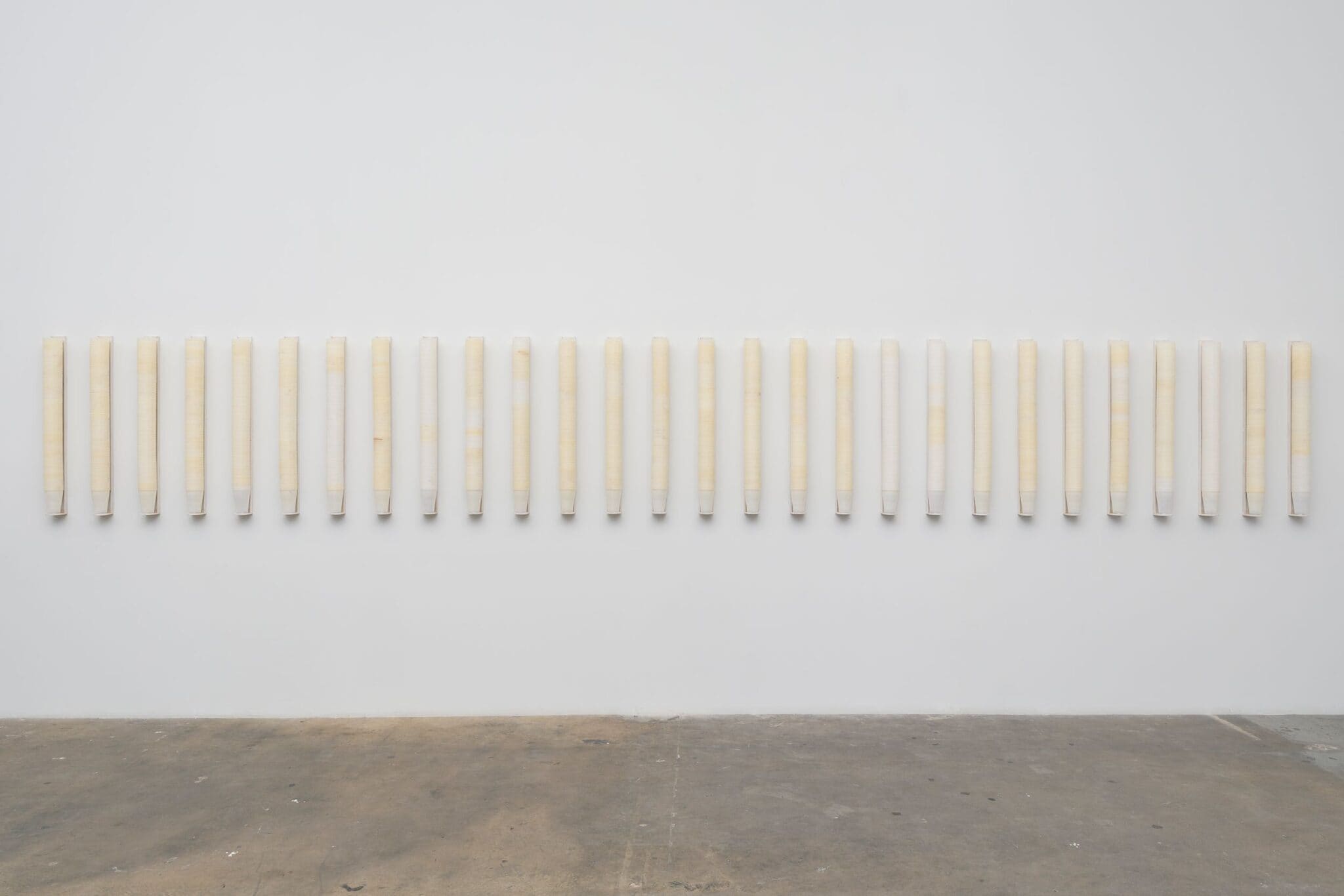
Ongoingness
Ongoingness brings together work by nineteen artists from Vielmetter Los Angeles’s program in an exhibition organized around questions of endurance, instability, loss, and transformation. Spanning installation, sculpture, drawing, painting, photography, ceramics, collage, and mixed media, the exhibition examines how individuals and communities continue living, imagining, and creating while under social, environmental, and political pressure. Its reflections on the United States’ past and future coincide with the country’s 250th anniversary, but the exhibition resists a straightforward commemorative narrative, focusing instead on contradictions, unresolved histories, and the fragility of national symbols. Vielmetter Los Angeles, 1700 South Santa Fe Avenue, Suite 101, Los Angeles, CA 90021. Opens July 25, 2026 — Runs through September 5, 2026.
Several works confront the instability of American myths, institutions, and symbols. Samuel Levi Jones’s Star Blooded Banner uses deconstructed finance books and pulped United States flags to create a textured abstraction from the physical remnants of financial and national authority. Robert Pruitt’s large-scale drawing The widow Cherry dismantling the Master’s House depicts a woman standing amid a cyclone of broken furniture and household objects that she appears to be telekinetically disassembling. Rodney McMillian transforms a cast-iron piggy bank with tumor-like fabric protrusions, giving physical form to the violence concealed within ideals of economic self-reliance and American individualism.
Throughout Ongoingness, materials are cut apart, weathered, pulped, stained, layered, suspended, and reassembled. These processes make persistence visible not as seamless progress, but as something improvised through damage, repetition, memory, and uncertainty. The exhibition ultimately proposes art as a means of remaining attentive while under pressure—an imperfect but continuing practice of confronting inherited histories, mourning what has been lost, and imagining how life might proceed otherwise.
Los Angeles, California
North America
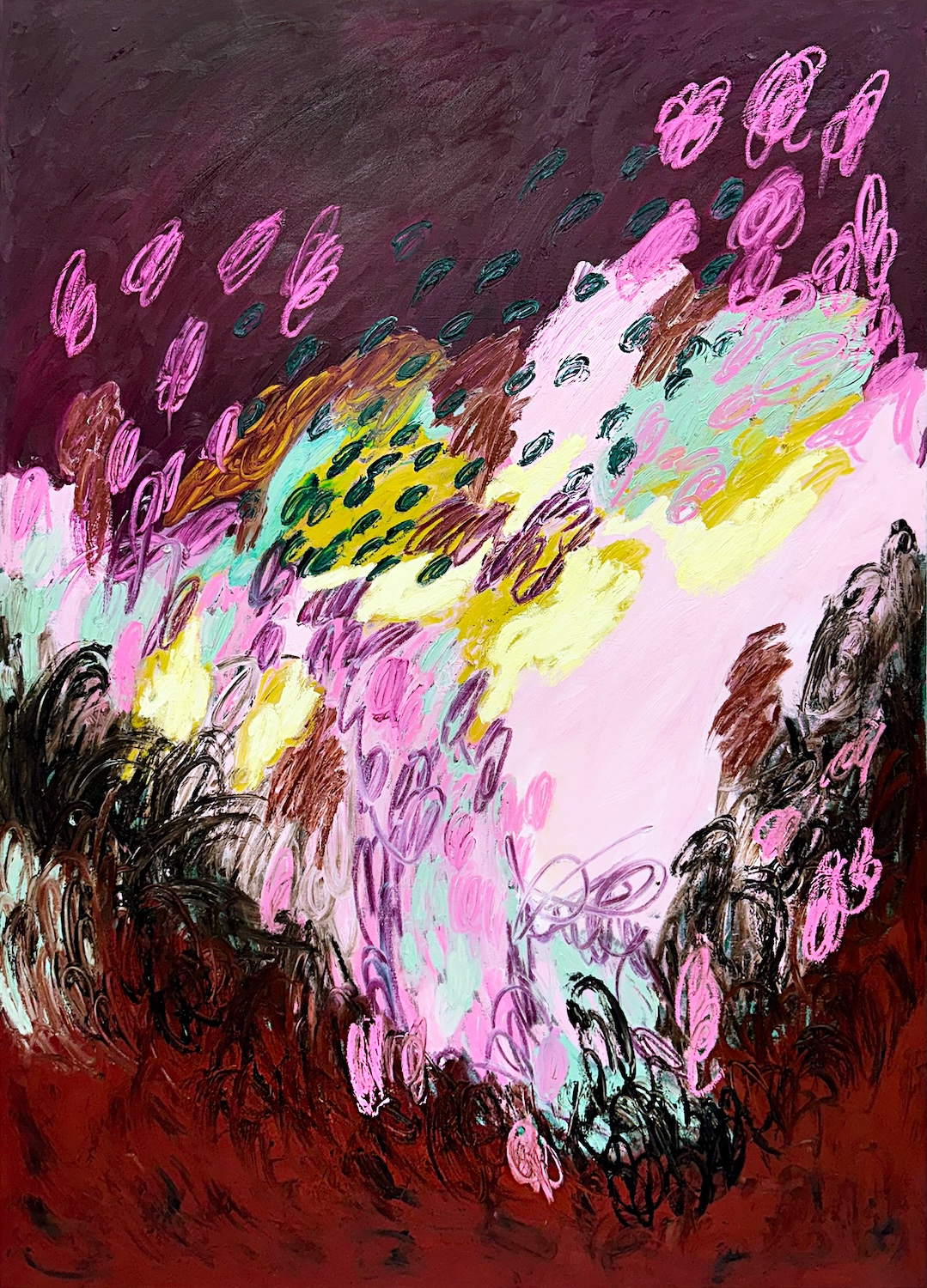
Cosecha
Cosecha, curated by Los Angeles–based artist and curator Ever Velasquez, brings together 35 artists in a multidisciplinary exhibition centered on labor, migration, community, and survival. Its title, the Spanish word for “harvest,” provides the exhibition’s central metaphor: what can be cultivated from hardship, how communities nourish one another, and what becomes possible when people continue planting, working, and building despite conditions designed to exhaust or displace them. Across painting, sculpture, photography, collage, mixed media, and installation, the participating artists approach working-class and immigrant experience through personal memory, cultural inheritance, everyday labor, family, land, and collective resilience. Charlie James Gallery, 969 Chung King Road, Los Angeles, CA 90012. Opens July 24, 2026 — Runs through August 29, 2026.
The exhibition specifically foregrounds the immigrant and working-class labor that underpins the broader economic system while frequently remaining undervalued or rendered invisible. Velasquez connects labor to immigration and the economy not as abstract political subjects, but as forces that structure intimate experiences of family, livelihood, belonging, and aspiration. The curatorial framing also acknowledges the ways hardship can become romanticized as a strategy for survival—the familiar belief that struggle will inevitably produce reward, or that one simply “reaps what one sows.” Cosecha complicates that narrative by placing individual perseverance alongside the larger political and economic structures that determine whose labor is protected, compensated, or exploited.
The expansive artist list reflects that emphasis on multiple experiences of migration, labor, and cultural belonging. Participating artists include Eva Aguila, Miguel Arzabe, Rachid Bouhamidi, Camila Buxeda, Daniela García Hamilton, Patrick Dean Hubbell, Álvaro D. Márquez, Carlos Rolón, José Guadalupe Sánchez III, Eilen Itzel do Espirito Santo, Estéban Whiteside, and many others working from distinct cultural, generational, and material positions. Velasquez’s own practice engages the histories and visual languages of Yoruba and Lucumí religious culture, Indigenous spiritual traditions, colonialism, and women’s experiences, providing additional context for an exhibition invested in how inherited knowledge and communal relationships survive structures of displacement and oppression.
Ultimately, Cosecha treats cultivation as both metaphor and social practice. To harvest requires earlier acts of planting, tending, waiting, and sustaining—forms of work that are often collective and whose results are never entirely guaranteed. By connecting this cycle to immigrant and working-class life, the exhibition recognizes labor without reducing its subjects to labor alone. Instead, it makes space for abundance, creativity, memory, resistance, and the communities people cultivate in order not merely to survive difficult circumstances, but to continue imagining lives beyond them.
Los Angeles, California
North America
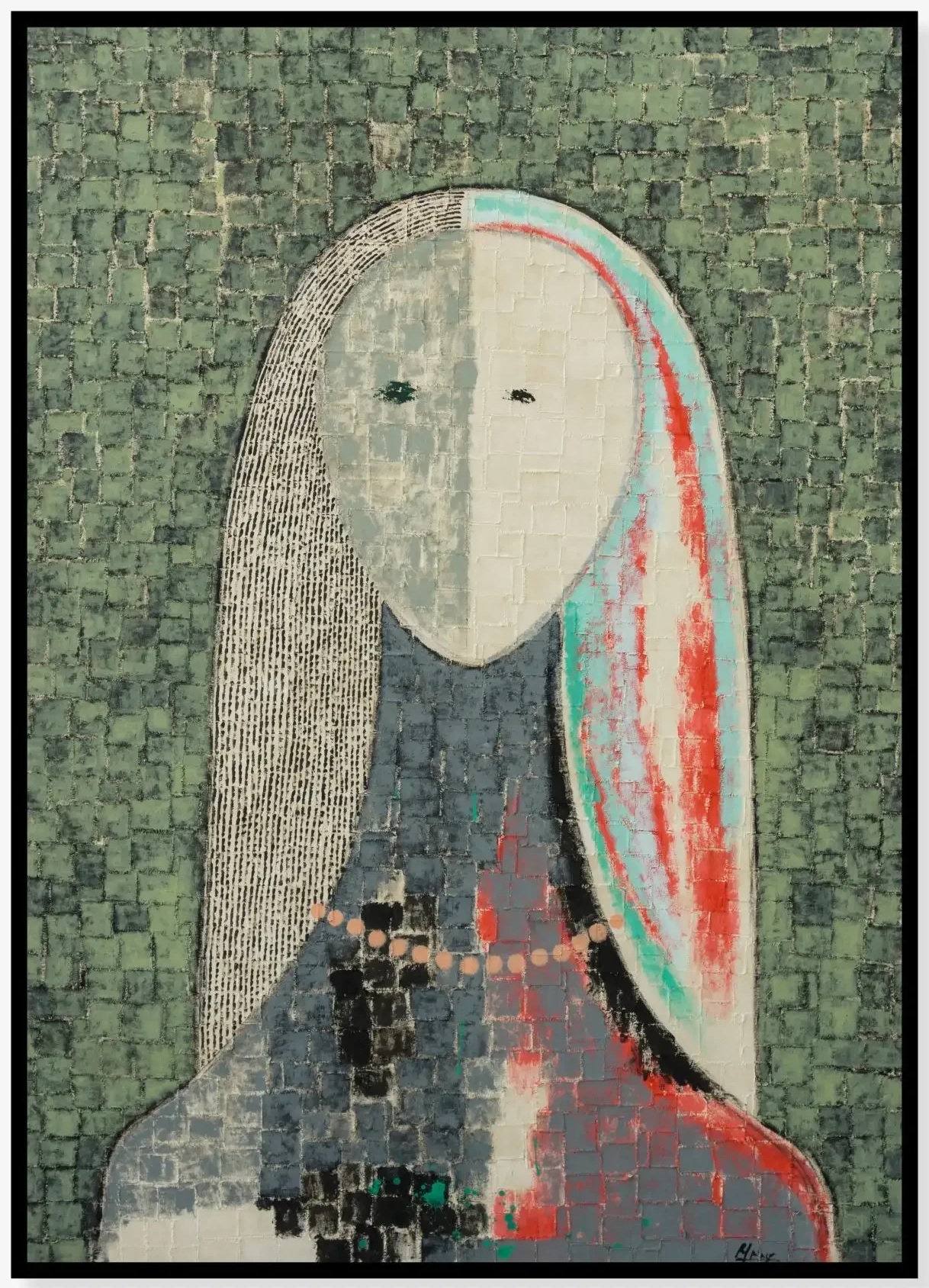
Roberto Diago: Presence
Presence presents a new body of mixed-media portraits and still-life works created over the past year. Diago draws on reclaimed materials and fragmented forms to explore Afro-Cuban identity, racism, history, and the lived realities of the Black diaspora.
Los Angeles, California
North America
The Laying of Hands
The Laying of Hands marked South African artist Manyaku Mashilo’s first solo exhibition in the United States. Through a new series of large-scale paintings, Mashilo explores the matrilineal transmission of knowledge and the objects, rituals, teachings, and forms of care passed between generations of women within her family and Sepedi culture. Her compositions position women as protective, self-possessed figures who occupy imagined landscapes connecting ancestral history, lived experience, and possible futures.
Clay and red ochre are central to the material and symbolic language of the exhibition. Mashilo draws from the koma, a coming-of-age ceremony for young Sepedi women. During this period, participants may be covered with letsoku, a vivid mixture of red ochre, clay, and animal fat that marks the sacred nature of their transition. Mashilo echoes this tradition by cloaking her painted figures in red pigment and incorporating ochre into her canvases. The material connects the body to land, ritual, womanhood, and cultural memory.
The exhibition is also deeply informed by Mashilo’s relationship with her late grandmother, who was a healer and guardian of familial rituals and knowledge. Although Mashilo grew up witnessing Sepedi rites of passage in Limpopo, she left her childhood home before experiencing the ceremony herself. The Laying of Hands therefore becomes both an act of remembrance and a space of imaginative reconstruction, allowing her to create a community of maternal figures, caretakers, and confidantes through painting.
Across The Laying of Hands, Mashilo treats cultural inheritance not as something static but as material that can be remembered, rebuilt, and transformed. Her paintings address belonging, Black womanhood, land, ritual, spirituality, and the possibility of constructing futures grounded in ancestral knowledge. The exhibition ultimately proposes collective care and the transfer of knowledge between generations as restorative forces capable of sustaining new worlds.
Los Angeles, California
North America