GET YOUR FREE
GUIDE HERE!
GUIDE HERE!

Thornton Dial
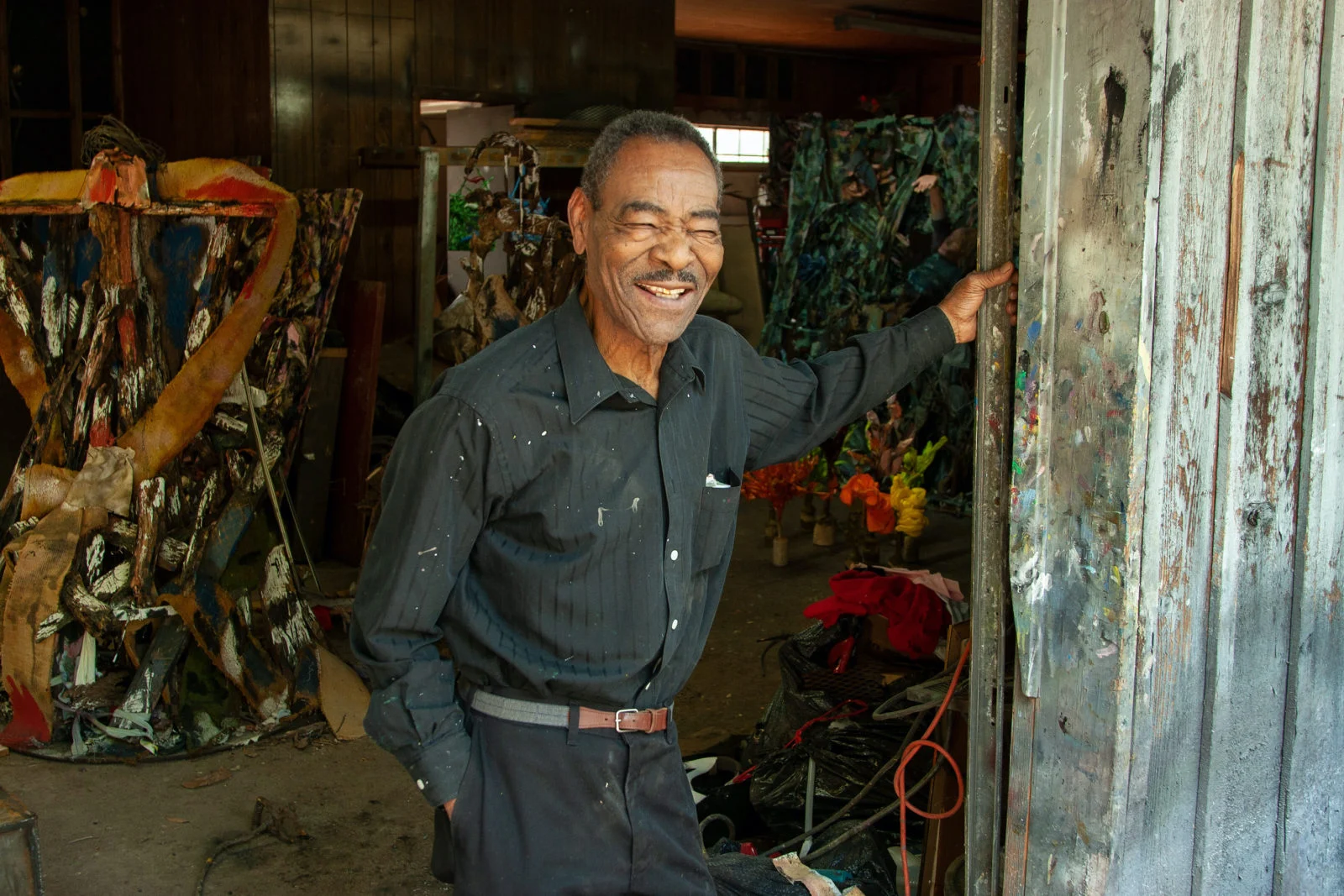
Courtesy of the artist
No items found.
Biography
Thornton Dial (September 28, 1928 – January 25, 2016) was a self-taught American artist whose monumental assemblages confront the intertwined histories of race, labor, violence, and survival in the United States. Born in rural Alabama to a family of sharecroppers, Dial worked for decades as a laborer and metalworker before gaining national recognition in the late 1980s. Drawing from his lived experience in the Jim Crow South, Dial developed a distinctive visual language rooted in found materials—scrap metal, wood, carpet, wire, clothing, and industrial debris—which he transformed into large-scale sculptural reliefs and mixed-media paintings.
Dial’s practice addresses the legacy of slavery, the Civil Rights Movement, economic exploitation, environmental devastation, and global conflict. His works are layered, physically dense, and symbolically charged, often incorporating animals, architectural forms, and abstract gestures to represent struggle and resilience. Despite being frequently categorized within “outsider” or “self-taught” traditions, Dial’s work engages deeply with mainstream art discourse, challenging institutional hierarchies and the boundaries between fine art and vernacular expression.
In the early 1990s, Dial received significant critical attention through exhibitions organized by curator William Arnett and later through major museum retrospectives. His work has been exhibited at institutions including the Smithsonian American Art Museum, the High Museum of Art, and the Museum of Fine Arts, Houston. Today, Dial is recognized as one of the most important American artists of the late 20th and early 21st centuries, whose practice expanded the possibilities of assemblage and redefined narratives of Southern Black creativity.
Birthday
September 28, 1928
N/A
Location
N/A
Show Support
Videos & Interviews
Artist Gallery
.webp)
No items found.